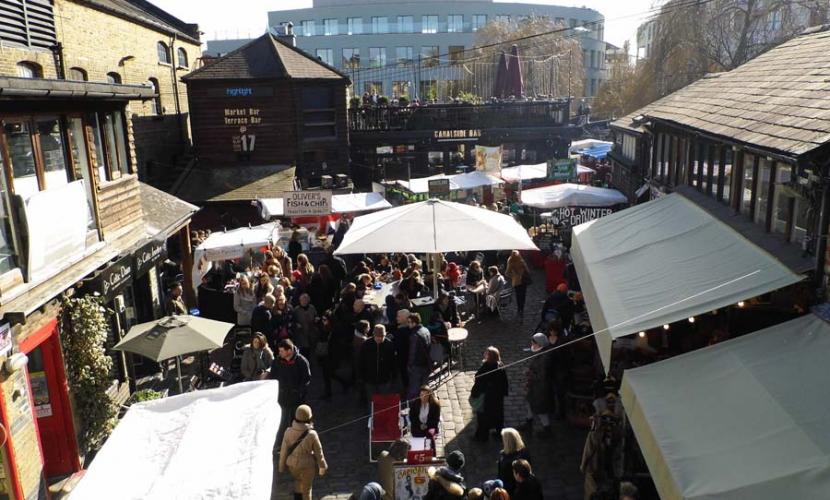
Camden Lock Market
The central hub of the area, featuring three floors of independent shops and craft stalls. It serves as the primary gateway to the surrounding canal network.
Visit the upper levels for a clear view of the lock.

Camden Lock is both a functioning canal lock on the Regent's Canal and the name of the market complex built around it. The basin and towpath remain open to narrowboats and walkers, while the warehouses and yards that once handled cargo now house over 1,000 market stalls and independent shops.
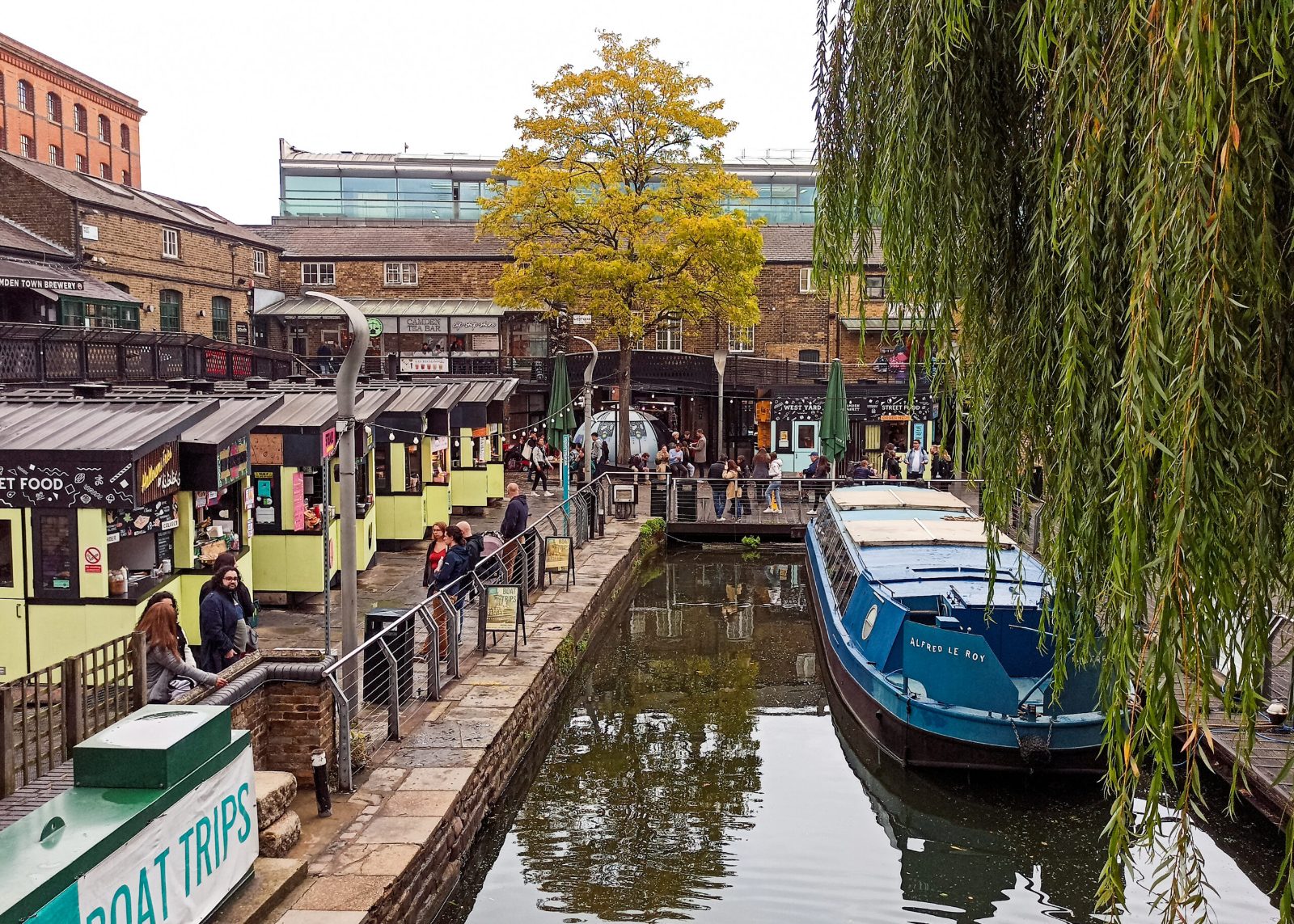
Quick answer
Camden Lock is a working canal lock and basin on the Regent's Canal at Chalk Farm Road, surrounded by a market complex occupying former timber and industrial warehouses. The lock itself still raises and lowers narrowboats between water levels, while the market areas and towpath are free to visit daily from 10:00 to 18:00. The site blends active waterway infrastructure with street food, vintage clothing and craft stalls in Victorian-era industrial buildings.
The Regent's Canal opened in 1820 to move coal, timber and building materials across North London without road congestion. The lock at Camden raised boats twelve feet to continue the route toward Limehouse, and the deep basin beside it became a transhipment point where cargo switched between narrow boats and horse-drawn carts headed into the city. Warehouses lined the water to store goods overnight, and by the 1850s Camden Lock was one of the canal's busiest commercial nodes. When what is camden lock today began to take shape in the 1970s, the canal trade had collapsed and the timber yards stood empty. A small crafts market opened in the cobbled yards in 1974, drawing makers who couldn't afford West End rents. The lock continued to operate for leisure narrowboats, and the contrast between working waterway and weekend market became the site's signature. By the mid-1980s the Sunday market had expanded into a seven-day operation, and the name Camden Lock came to represent the entire market quarter stretching from the towpath to Chalk Farm Road. The canal basin itself remains the geographic and operational heart of the site. Narrowboats moor along the western side, and the lock gates at the southern end cycle open several times each hour during the navigation season. The original cobblestones and cast-iron mooring rings are still in place, and the brick vaults beneath the market halls once stored coal and grain. The blend of working lock infrastructure and pedestrian market creates a layered site where visitors walk along active quaysides and cross footbridges originally built for dockers moving between warehouses. Understanding what is camden lock means recognizing that the name applies to three overlapping realities: the physical lock and canal basin engineered in 1816, the market complex that grew inside the old cargo yards after 1974, and the wider Camden Market brand that now includes five adjoining market areas. The original lock and towpath remain public rights of way managed by the Canal & River Trust, while the market buildings are privately operated. The industrial architecture and waterside setting distinguish Camden Lock from the newer market zones built on former stables and rail yards to the south and east.
“The contrast between working waterway and weekend market became the site's signature.”
Camden Lock maintains a consistent daily schedule throughout the week. The market areas and towpath remain open seven days a week to accommodate visitors.
Camden Lock is a public destination, meaning there are no entry charges for accessing the site. Visitors are free to explore the market areas and the canal towpath without purchasing an admission ticket.
Verdict: A typical adult pays 0 GBP for entry, as access to the grounds and market areas remains free of charge for everyone.
Camden Lock is located at Camden Lock Place, Chalk Farm Road, London NW1 8AF. It is situated along the Regent's Canal and is most easily accessed by the London Underground.
Northern Line to Camden Town Station
Routes 24, 27, or 31 to Camden Town
Follow signs from Camden Town station along Camden High Street
London Waterbus from Little Venice to Camden Lock
Arrive between 10:00–12:00 to avoid the peak afternoon crowds and lunch queues at the market entrances.
Camden Lock consists of several interconnected zones, each offering a distinct atmosphere ranging from historic craft stalls to modern canalside dining. Exploring these areas reveals the diverse layout of this landmark destination.
The central hub of the area, featuring three floors of independent shops and craft stalls. It serves as the primary gateway to the surrounding canal network.
Visit the upper levels for a clear view of the lock.
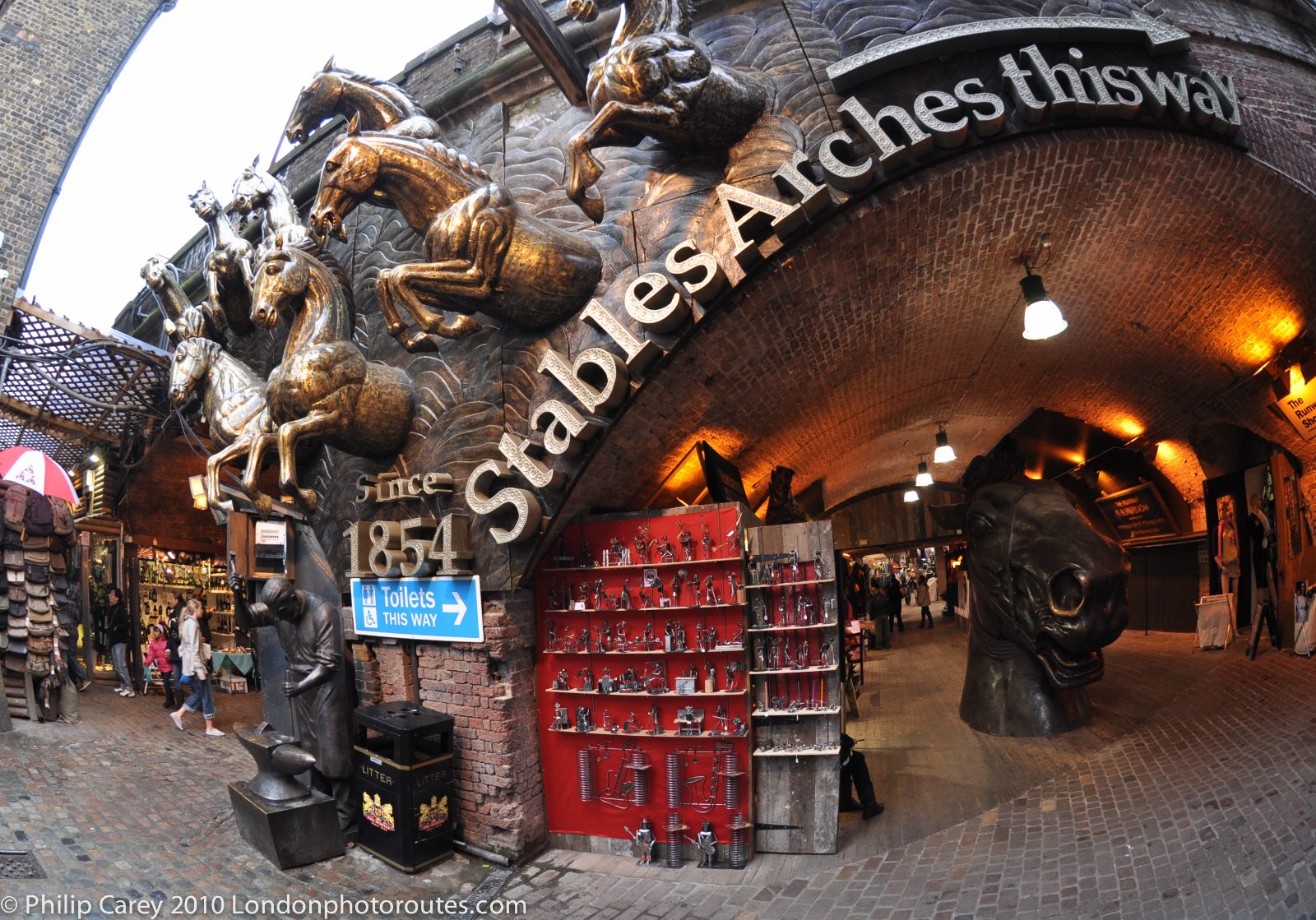
Built into the site of a former horse hospital and carriage ramp, this area is defined by its brick arches and bronze horse statues. It focuses on vintage fashion and alternative apparel.
Look for the Horse Tunnel to see original architecture.
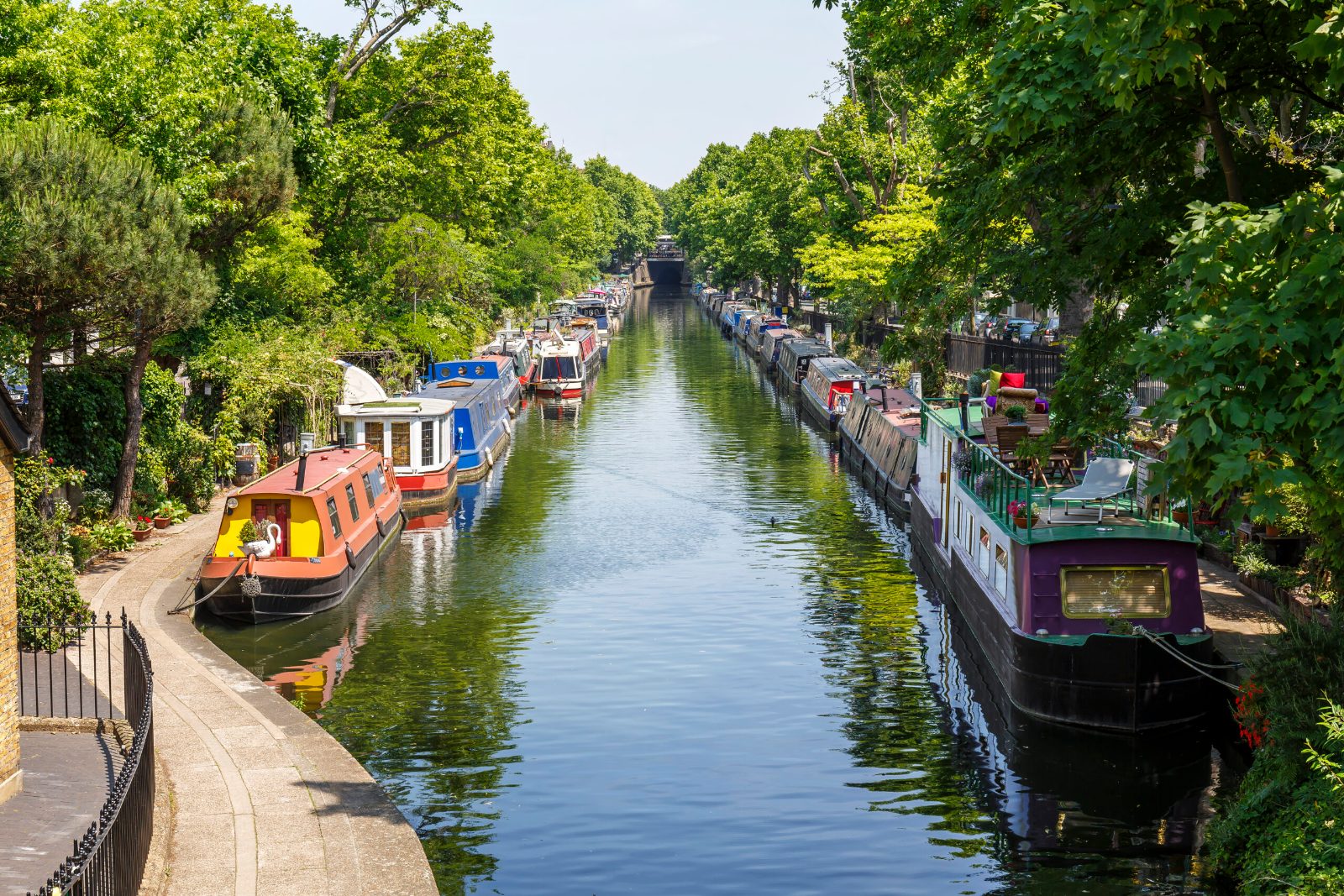
A pedestrian walkway running alongside the water, connecting the market areas to the wider canal system. It provides a quiet vantage point for watching narrowboats navigate the lock.
Walk toward the bridge for the best canal perspective.
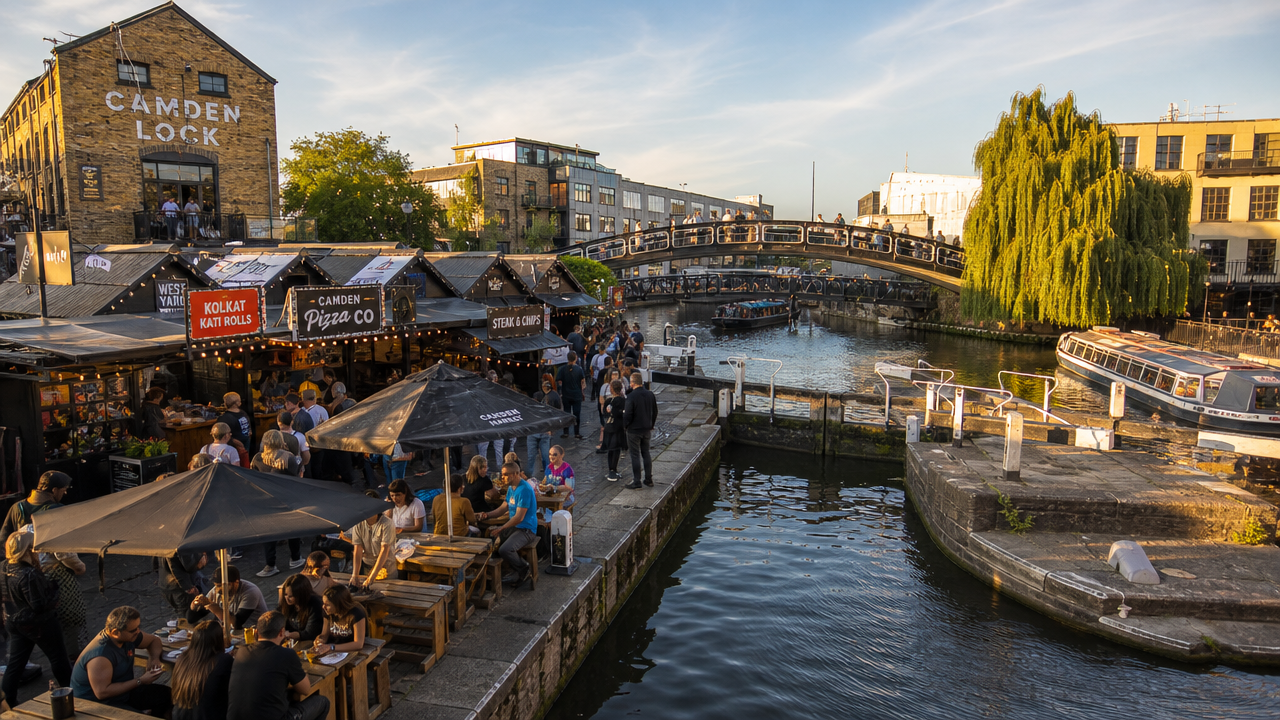
A cluster of outdoor food stalls and seating areas situated directly by the water. This space offers views of the historic lock gates and passing canal traffic.
Grab a coffee and sit by the lock gates.
The Regent's Canal reached Camden in 1816, carving a commercial artery through farmland to link the Grand Junction Canal at Paddington with the Thames at Limehouse. Engineers built three paired locks here to lift barges twelve feet, creating what became known as Hampstead Road Locks. By the 1820s the basin teemed with coal wherries, timber barges, and ice shipments bound for the city's markets. The lock-keeper's cottage and wharfside warehouses rose in yellow stock brick, their loading bays opening directly onto the water. Trade peaked in the 1850s when the canal carried over a million tons annually, but railway competition eroded cargo volumes through the late Victorian era. By 1929 the Regent's Canal Company merged with the Grand Union system in a defensive consolidation. Commercial traffic dwindled after 1945, and by the 1960s the basin lay near-derelict, its warehouses boarded and its towpath overgrown. In 1972 a small weekend crafts market opened in the disused timber yard, drawing makers and musicians to the canalside. That modest gathering expanded rapidly, and by 1974 permanent traders had colonised the old transit sheds, renaming the site Camden Lock Market. Today the original 1816 lock gates still lift canal boats between the lower and upper pounds, operated by British Waterways volunteers. The brick warehouses now house vintage clothing stalls, record shops, and street-food kitchens, their iron mooring rings and hoist beams preserved in situ. Visitors walking the towpath pass beneath the same cast-iron bridges that carried horse-drawn barges two centuries ago, the industrial bones of what is Camden Lock visible in every brick course and capstan.
Regent's Canal completed through Camden; Hampstead Road Locks opened to raise barges twelve feet between basins.
Coal, timber, and ice wharves established; lock-keeper's cottage and brick warehouses built along the basin.
Canal traffic peaked at over one million tons annually, making Camden a hub for goods bound for central London.
Regent's Canal Company merged into the Grand Union system as railway competition reduced barge cargo.
First weekend crafts market opened in the derelict timber yard beside the locks.
Permanent traders occupied the old transit sheds, establishing Camden Lock Market as a fixed site.
Everything you need to know about what is camden lock
What is camden lock is a question often asked by visitors to the Regent's Canal area. It refers to a historic lock on the canal and the surrounding market district, famous for its diverse stalls and industrial heritage.
Entry to the market areas and towpath is completely free, meaning there is an entrance fee of 0 GBP. You can wander through the different zones without needing a ticket to access the grounds.
The best arrival window is between 10:00 and 12:00 to avoid the peak afternoon crowds. Visiting early helps you enjoy the atmosphere and lunch queues with more ease.
This famous London destination is located at Camden Lock Place, Chalk Farm Road, London NW1 8AF. You can easily reach this canal attraction using public transport links nearby.
Families are welcome to explore the area, as it provides a vibrant look at a key city landmark. It is a great spot for an afternoon stroll along the water, though it can become busy with shoppers.
The site originated as part of the industrial canal network that supported London's commerce. Today, this Camden attraction serves as a cultural hub for locals and tourists to experience the unique urban waterside scenery.
Camden Market Boat Ride
Read more GuideIs Camden Safe for Tourists?
Read more GuideParking Near Camden Lock
Read more GuideCamden Lock Events
Read more Tickets & toursCamden Lock to Little Venice Boat
Read more GuideCamden Lock Boat Trip Prices
Read more Tickets & toursCamden Lock Boat to London Zoo
Read more